
Antonio Lazcano Araujo
Opening conference
Universidad Nacional Autónoma de México, México
Esperanza Martínez Romero
Universidad Nacional Autónoma de México, México
Antonio González Peña
Universidad de California en San Diego, Estados Unidos de América
Osvaldo Ulloa Quijada
Universidad de Concepción, Chile
Meet our keynote speakers
Antonio Lazcano Araujo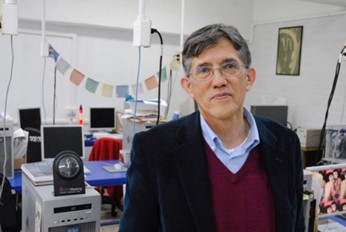
Antonio Lazcano Araujo is Professor Emeritus at the Universidad Nacional Autónoma de México, where he is dedicated to research and teaching on the origin and early evolution of life. He has worked on chemical aspects of the early Earth, meteorite analysis and evolution of microorganisms. He has authored or co-authored nearly 200 research articles and book chapters on cellular origin and evolution, and several popular books, including The Origin of Life, The Spark of Life and The Prodigious Bacterium. He has been visiting professor at the Universities of Havana, Autónoma de Madrid, Houston, Valencia, Orsay Paris-Sud, and California at San Diego, and the University of Rome, as well as visiting researcher at the Pasteur Institute in Paris, at the ETH Zentrum in Zurich, at the A. N. Bakh Institute of Biochemistry in Moscow, among others. In 2002-2004 he chaired the Evaluation Committee of the NASA Astrobiology Institute, as well as being Coordinator of the Gordon Conference of the Origins of Life. He was for eight years a member of the NASA Advisory Committee for studies of the origin and evolution of life (NASA-COEL), and twice President of the International Society of the Study of the Origins of Life, being to date the only Latin American scientist to hold this position. He holds three Honorary Doctorates : one awarded by the University of Milan (Italy) in 2008, another by the University of Valencia (Spain) in 2014, and another one in 2015 by the Universidad Michoacana de San Nicolás de Hidalgo. In 2013 the Third Evolution Summit awarded him the Charles Darwin Distinguished Scientist Award, and in 2018 the College de France awarded him the Guillaume Bude Medal. In October 2014 he joined El Colegio Nacional, the most important cultural institution in Mexico, and in 2023 he was elected as an honorary member of the National Academy of Medicine.
Esperanza Martínez Romero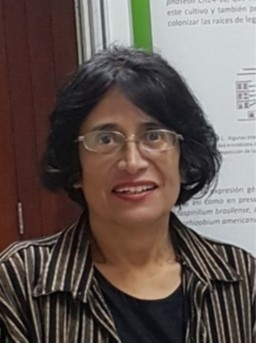
Dr. Martínez Romero completed her undergraduate studies at the Institute of Biomedical Research of the UNAM and her master’s and doctoral studies at the Center for Research on Nitrogen Fixation, now the Center for Genomic Sciences of the UNAM, where she works as a Senior Researcher. She was a pioneer in the use of molecular markers in the study of the diversity and taxonomy of nitrogen-fixing bacteria associated with plants of agricultural or forestry interest, which led her to discover and propose new bacterial species. She is an expert in bacterial symbioses and has promoted metagenomics and metatranscriptomics in the study of symbioses and microbial communities. She teaches undergraduate and graduate courses in Biomedical Sciences, Biology and Biochemistry at UNAM. She has supervised more than 50 theses, 29 of which are doctoral theses. She was the Coordinator of the Bachelor’s Degree in Genomic Sciences from 2013 to 2019. She has been invited to present keynote lectures at international congresses and institutional seminars. She has been a juror for awards such as the National Science Prize and the UNESCO Loreal Prize and for promotions of researchers from abroad and editor of international journals. A species of bacteria was named in her honor, Rhizobium esperanzae. For her research work she was awarded the National University Prize in 2005, the Natural Sciences Prize of the Mexican Academy of Sciences, the Mexican National Science Prize in 2019 and the Loreal-UNESCO Prize for Women in Science in 2020 among other awards. She has appeared in the last two years at the top of the list of the most cited scientists in biochemistry in Mexico and Latin America. She has the appointment of emeritus in the SNI. She has published more than 200 articles in international journals and 35 chapters in books. She has more than 25 thousand citations to her work with an H index of 90.
Antonio González Peña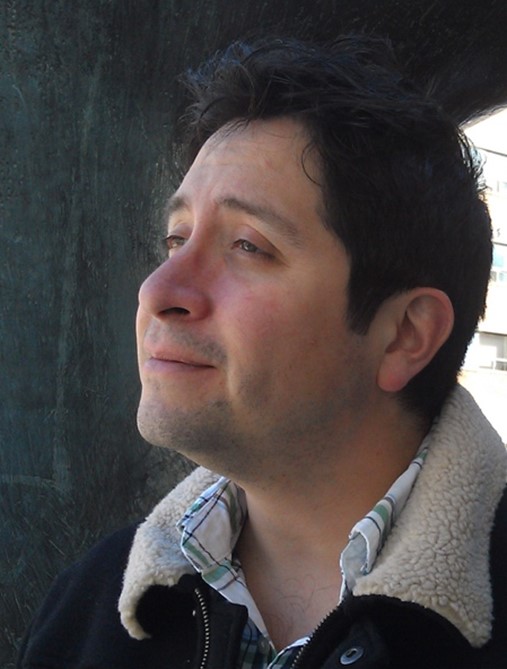
Antonio González Peña is a Programmer Analyst in the Department of Pediatrics at the University of California, San Diego (UCSD). He has been part of the development team of multiple bioinformatics tools, such as scikit-bio, QIIME, QIIME 2, and Emperor. In addition, Dr. Gonzalez is the lead developer of Qiita, a public and fully open source platform for the management and analysis of microbiome studies. As part of his efforts at Qiita, he is especially interested in metadata curation and the reproduction of results from raw files, with the goal of large-scale meta-analysis.
Osvaldo Ulloa Quijada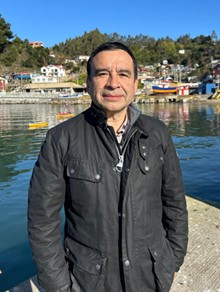
Ph.D. in Oceanography and M.Sc. in Marine Biology from Dalhousie University (Canada). He did his postdoctorate at the Niels Bohr Institute of the University of Copenhagen (Denmark). Director of the Millennium Institute of Oceanography, full professor of the Department of Oceanography at the U. of Concepción and Member of the Chilean Academy of Sciences. In 2018 he led the exploration to the Atacama Trench, the deepest place in the Southeast Pacific, which was recorded in the documentary Atacamex (2019). More recently, as part of Atacama Hadal, the first manned expedition to the depths of this trench, he became the first human being to descend to its 8,062 meters depth.

 ISME-Lat 2025